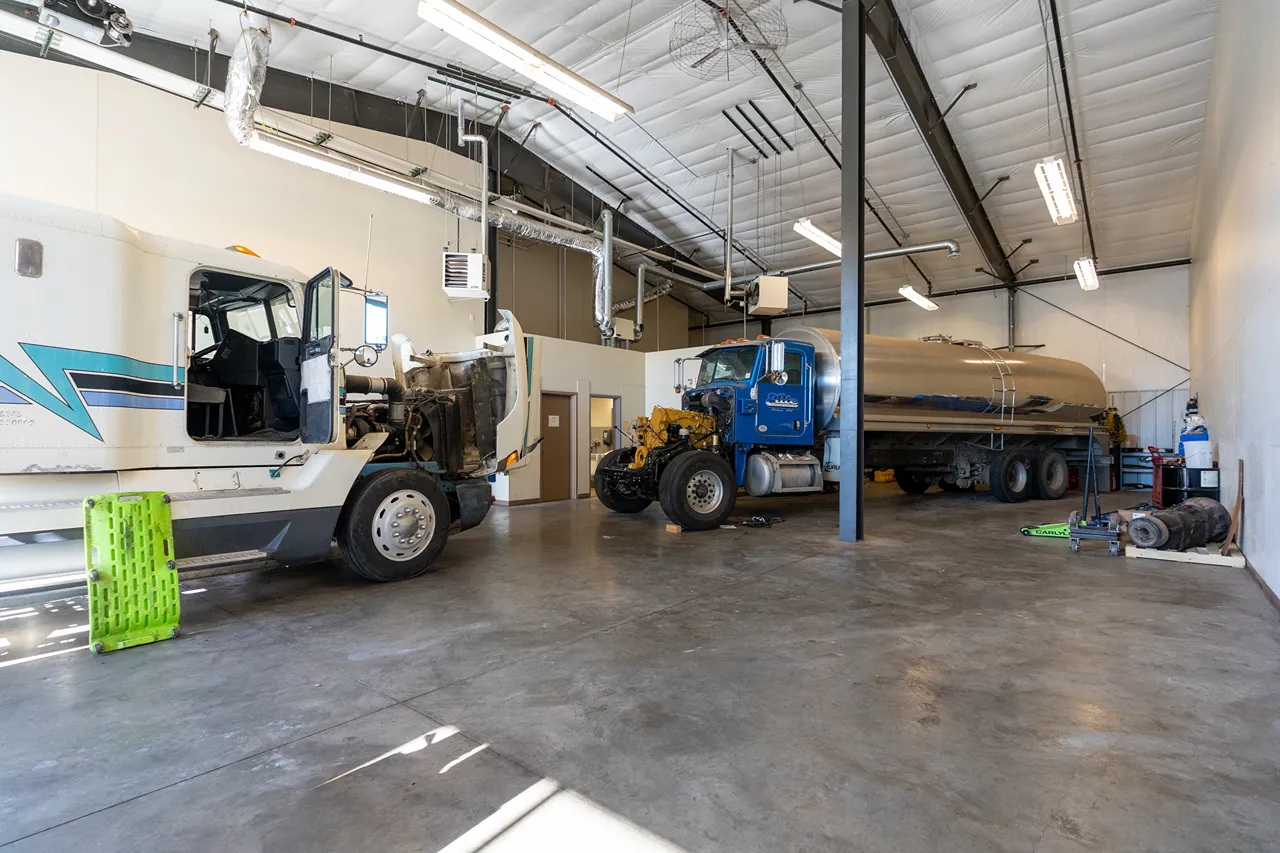
A truck can have a full coolant reservoir and still overheat halfway down U.S. Highway 71. Dust, blocked cooling fins, worn tires, and neglected trailer components often cause trouble before a dashboard warning appears.
August conditions expose small maintenance problems during long shifts, loaded runs and repeated travel on Todd County roads. A focused fleet preventive maintenance inspection can help you catch those problems before late-summer work ramps up.
Why Do Long Prairie Work Trucks Need August-Specific Maintenance?
August creates a demanding mix of warm temperatures, dusty roads, heavy payloads, and extended operating hours. Farm trucks, municipal vehicles, service-body pickups, dump trucks, and local delivery vehicles may travel between paved highways, gravel roads, agricultural properties, and active job sites in a single shift.
Those operating conditions affect systems differently than a routine year-round checklist suggests. Your priorities should reflect actual duty cycles, including engine hours, idle time, accessory use, trailer loads and exposure to dust.
Fleets serving the Long Prairie industrial park may face frequent starts, short trips and equipment operation. Agricultural and construction fleets may spend more time on Minnesota Highway 287 and Todd County roads, where uneven surfaces and airborne debris increase wear.
How Should You Inspect Cooling Systems and Airflow?
Start with the radiator and charge-air cooler, not just the coolant reservoir. Insects, chaff, dust and plant material can collect between cooler surfaces and restrict the airflow needed to transfer engine heat into the surrounding air.
A thorough diesel cooling system inspection should include:
- Coolant level, concentration and visible condition
- Radiator and charge-air-cooler cleanliness
- Hoses, clamps and possible seepage
- Fan belts, pulleys and tensioners
- Water-pump condition
- Cooling fans and fan-clutch operation
- Radiator cap condition
- Temperature sensors and warning lights
Pay close attention to trucks that pull trailers, idle while operating equipment or travel at low speeds around farms and job sites. Low-speed work reduces natural airflow, making proper fan and fan-clutch operation especially important.
Never open a pressurized cooling system while it is hot. Address unexplained coolant loss, rising temperatures or repeated fan operation before sending the vehicle onto a longer U.S. Highway 71 or Minnesota Highway 27 route.
When Should Engine and Cabin Air Filters Be Checked?
Dusty conditions can shorten filter life, but the calendar alone should not determine replacement. Inspect each filter according to its condition, manufacturer guidance and the truck’s actual operating environment.
A clogged diesel engine air filter can restrict airflow and contribute to reduced power or poor fuel economy. Damaged intake ducting may allow unfiltered air into the engine, so inspect clamps, boots and connections while the filter housing is open.
Cabin filters matter too. A restricted cabin air filter can weaken airflow from the vents and place additional strain on heating and air-conditioning performance during long August shifts.
Clean accessible exterior cooler surfaces carefully and use methods approved for the equipment. Excessive air pressure or aggressive washing can bend fins and reduce airflow rather than improve it.
Which Tire and Wheel Checks Matter Most in August?
Tires deserve central attention because Long Prairie fleets frequently move between highways, gravel surfaces, farm entrances and construction sites. Heat and heavy loads can magnify the effects of low inflation, existing damage or uneven wear.
Check tire pressure when the tires are cold. Compare the readings with the vehicle, tire or fleet specifications rather than relying on appearance alone.
Your commercial truck tire inspection should cover:
- Tread depth and tread condition
- Cuts, punctures and embedded debris
- Sidewall cracking, bulges or impact damage
- Irregular or accelerated wear
- Valve stems and caps
- Wheel condition and fasteners
- Trailer tires and dual assemblies
- Spare-tire condition and inflation
Uneven wear may indicate more than a tire problem. Feathering, shoulder wear or repeated wear on one position can point to alignment, steering, suspension or wheel-bearing concerns.
Trucks running regional routes on U.S. Highway 71 or Minnesota Highway 27 should not leave with questionable tires. A minor defect near the yard can become a roadside failure after sustained speed, heat and loading.
How Do Loads and Trailers Affect Brake Inspections?
August workloads often involve frequent stops, loaded equipment trailers, agricultural hauling and regional service calls. Those demands increase the importance of complete commercial truck brake service, even though warm weather by itself does not automatically cause brake failure.
Inspect brake linings, shoes, drums, hydraulic components, air lines and hoses as applicable. Check parking-brake operation, brake adjustment, warning lights and signs of fluid or air leakage.
Trailer brakes need the same attention as the towing vehicle. A trailer that pushes the truck during braking, pulls to one side or triggers an ABS warning should be inspected before returning to service.
Brake concerns become especially serious when a truck carries tools, feed, livestock-related materials, aggregate or machinery. Greater operating weight requires the entire braking system to work as designed.
What Should Be Included in a Trailer Safety Inspection?
Trailers are common across Long Prairie’s agricultural, construction, municipal and service fleets, yet they are often treated as accessories rather than vehicles with their own maintenance needs.
Include these items in every trailer safety inspection:
- Hitch receivers, pintle hooks, fifth wheels and couplers
- Safety chains and attachment points
- Breakaway systems
- Wiring, connectors, lights and reflectors
- Tires, wheels and wheel bearings
- Brakes and brake controls
- Suspension components
- Decking, ramps and tiedown points
Look for cracked welds, loose fasteners, damaged decking and worn connection points. Equipment trailers that regularly enter uneven job sites or agricultural properties may develop wear that remains hidden during a quick walkaround.
Confirm that the trailer’s load is properly distributed and secured. Poor loading can affect braking, steering, tire wear and suspension stability even when every mechanical component is serviceable.
How Do Rural Roads Affect Steering and Suspension?
Potholes, gravel, washboard surfaces and repeated job-site access can accelerate steering and suspension wear. Loaded trailers and uneven roads may also reveal looseness that is difficult to notice during unloaded city driving.
Inspect tie rods, ball joints, steering linkages, shocks, springs, bushings and U-bolts. Depending on the vehicle, check wheel bearings, air-suspension ride-height components and trailer suspension parts.
Watch for these warning signs:
- Pulling or wandering
- Steering-wheel vibration
- Clunks over bumps
- Uneven ride height
- Excessive bouncing
- Irregular tire wear
- Changes in trailer tracking
Do not dismiss these symptoms as normal behaviour on rough roads. A truck travelling Minnesota Highway 287 and surrounding Todd County routes still needs predictable steering and stable handling when it returns to higher-speed pavement.
Which Fluids, Leaks and Lubrication Points Need Attention?
Maintenance intervals for work trucks should account for more than mileage. Engine hours, idle time, hydraulic use and power take-off operation may create substantial wear while the odometer barely moves.
Review engine oil, transmission fluid, differential lubricant and power-steering fluid. Inspect hydraulic reservoirs, hoses, fittings and cylinders on dump trucks, utility vehicles, liftgates and service equipment.
Complete required chassis lubrication at the proper grease points. Check PTO systems, hoists, liftgates and other vocational equipment for leaks, abnormal noise or slow operation.
Fresh drips, wet fittings and dirt-covered seepage deserve investigation. Catching a small leak in the yard is far easier than dealing with low fluid, component damage or environmental cleanup at a customer property.
Why Should Batteries and Electrical Accessories Be Tested?
Summer heat can accelerate battery deterioration and expose weak electrical connections. This becomes particularly important on service trucks running warning lights, pumps, inverters, liftgates, communication equipment or work lighting.
Inspect battery cases, hold-downs, terminals, cables and grounds. Test alternator output and note slow cranking, intermittent accessory operation or repeated low-voltage warnings.
Check auxiliary wiring for corrosion, abrasion and loose connections. Electrical accessories add demand to the charging system, so a truck that starts normally may still have inadequate output under a full working load.
How Should Fleets Prepare for the Next Work Cycle?
August maintenance should support the next round of agricultural hauling, equipment movement, delivery routes, and construction deadlines. It should not become a full winterization program.
Focus on immediate reliability and early planning:
- Test batteries and charging systems before cooler mornings arrive.
- Repair lighting defects as daylight hours begin to decrease.
- Schedule larger repairs before late-summer workloads peak.
- Review trailer availability before hauling demands increase.
- Plan fall maintenance without delaying current safety repairs.
School and community traffic also returns near the end of summer. Reliable brakes, lighting, mirrors, backup cameras and warning equipment become increasingly important for municipal, utility, delivery and contractor fleets operating around populated areas.
What Inspection Records Should Minnesota Fleets Maintain?
Minnesota commercial-vehicle requirements vary by vehicle and operation, so fleet managers should confirm which rules apply to their equipment. Covered vehicles may require daily driver inspections, defect reports, repair documentation and periodic inspections.
Use documentation to strengthen your maintenance program, not merely to complete paperwork. Record reported defects, corrective repairs, inspection dates, and the person responsible for releasing the vehicle.
Keep trailers within the same maintenance and documentation process as powered units. Most importantly, do not return an unsafe vehicle to service simply because the next assignment is urgent.
Keep Late-Summer Work Moving
August can expose cooling restrictions, tire damage, brake wear and loose suspension components at the worst possible time. Prioritize systems affected by heat, dust, heavy loads and Long Prairie’s mix of highway, gravel and job-site travel.
For professional work truck maintenance in Long Prairie, schedule an inspection with our team at Prairie View Diesel Repair. Give us a call at 320-333-8292 or visit our Contact Us page, and a member of our team will be in touch.
Frequently Asked Questions
What is the most important August fleet maintenance priority?
Cooling-system airflow, tire condition, brakes and trailer components should receive high priority. The exact order depends on each vehicle’s workload, routes, engine hours and exposure to dust.
Should air filters automatically be replaced in August?
No. Inspect filters based on their condition, restriction indicators, duty cycle and manufacturer recommendations. Replace filters when they are damaged, excessively restricted or due under the applicable service schedule.
Why should trailer tires be inspected separately?
Trailer tires may age, lose pressure or develop damage without producing symptoms in the tow vehicle. Check inflation, tread, sidewalls, wheel fasteners and bearings before loaded travel.
Can uneven tire wear indicate a suspension problem?
Yes. Irregular wear may indicate alignment issues, worn steering parts, loose suspension components, improper inflation or wheel-bearing concerns. Diagnose the cause before replacing the tire alone.
Should work-truck maintenance be based only on mileage?
No. Engine hours, idle time, PTO operation, hydraulic use, load weight and road conditions may be more relevant than mileage for some agricultural, construction and municipal vehicles.


