A truck can run perfectly in the morning and be parked by afternoon because of one failed valve, cable, bearing, or brake component. For agricultural, manufacturing, delivery, and regional trucking fleets around Long Prairie, that small failure can quickly turn into a costly delay.
The challenge with replacement parts for heavy-duty trucks in Long Prairie is not simply finding a component. You need the correct part, matched to the truck's configuration, available quickly enough to keep downtime under control.
Why Does Parts Sourcing Matter for Long Prairie Fleets?
Long Prairie sits at the junction of U.S. Highway 71, Minnesota Highway 27, and Minnesota Highway 287, giving local trucks access to agricultural operations, manufacturers, neighbouring communities, and regional freight routes. Interstate 94 is also less than 20 miles away, expanding connections to larger freight corridors across Central Minnesota.
That highway access matters because Long Prairie fleets serve several different duty cycles. A Class 8 tractor running regional freight has different wear patterns than a farm-support truck, straight truck, service vehicle, or trailer working short routes between agricultural facilities.
Long Prairie also has a strong manufacturing and agricultural base. Livestock operations, food production, regional delivery, plant logistics, and local trucking all create steady demand for heavy-duty truck replacement parts.
Downtime can cost far more than the part itself. A slightly more expensive component available today may provide better overall value than a cheaper part that leaves your truck parked for several days.
What Should You Check Before Ordering Heavy-Duty Truck Parts?
Heavy-duty trucks frequently use components from several manufacturers, even within the same make and model. Engines, transmissions, axles, suspensions, brakes, and electrical systems may differ from one truck to another.
Before ordering commercial truck parts, gather:
- Vehicle identification number, or VIN
- Truck make, model, and year
- Engine manufacturer and model
- Transmission model
- Axle manufacturer and identification
- Suspension configuration
- Existing component manufacturer
- OEM or component part number
- Trailer make, model, axle, and suspension information when applicable
Check the component itself when possible
A VIN gets you started, but it may not tell the entire story.
Previous repairs, specification changes, replacement axles, or aftermarket components can alter what is actually installed on the truck. When possible, compare the number stamped or labelled on the existing component before ordering a replacement.
That extra step is especially useful for mixed fleets using equipment from several manufacturers.
Which Brake And Air-System Parts Should You Prioritize?
Brakes should sit near the top of any truck parts sourcing strategy. They’re your first and best line of safety on the road.
Common replacement items include:
- Brake chambers
- Slack adjusters
- Air valves
- Air hoses and fittings
- Brake drums
- Brake pads
- S-cam hardware
- Air-dryer service components
The air dryer deserves extra attention heading into colder weather because it removes moisture from the compressed-air system. Excess moisture can compromise braking performance and create a greater risk of freezing once temperatures fall.
For trucks travelling U.S. 71, MN 27, MN 287, or connecting with I-94, keeping common air brake system parts accessible can help prevent a relatively straightforward repair from turning into extended downtime.
Which Suspension And Steering Parts Commonly Wear Out?
Agricultural hauling, regional delivery, manufacturing support, and loaded trailer work all place stress on truck suspension parts.
Heavy-duty suspension systems support vehicle and cargo weight while helping absorb road impacts. Common configurations include leaf springs and air suspension, while shock absorbers control impacts and rebound movement.
Parts worth monitoring include:
- Shock absorbers
- Bushings
- Torque rods
- Leaf springs
- Air suspension components
- Tie-rod ends
- Steering linkage components
- Suspension mounting hardware
Match replacement parts to the duty cycle
A truck that spends most of its time hauling agricultural loads may place different demands on suspension components than a regional highway tractor.
Don't choose a component solely because it physically fits. The replacement should also be appropriate for the truck's weight, axle configuration, application, and expected operating conditions.
Which Starting And Charging Parts Matter Before Colder Weather?
October is a good time to inspect heavy-duty electrical parts before sustained Minnesota cold arrives.
Parts to consider include:
- Batteries
- Starters
- Alternators
- Battery cables
- Electrical connectors
- Grounds
- Charging-system wiring
Weak connections and marginal batteries can become much more noticeable as temperatures drop. For fleets that cannot afford missed morning departures, checking these components before winter is easier than diagnosing a no-start during a cold roadside call.
Which Cooling And Engine-Support Parts Should Be Kept Available?
Cooling problems can sideline a truck quickly, yet many failures start with relatively inexpensive wear items.
Useful diesel engine parts to keep accessible include belts, hoses, tensioners, thermostats, filters, clamps, and related cooling-system hardware.
October provides an opportunity to inspect belts and hoses that have endured summer heat and heavy agricultural work before colder temperatures make roadside repairs less convenient.
Which Trailer Parts Deserve Extra Attention?
Don't let the tractor receive all the attention.
Grain trailers, livestock trailers, dry vans, flatbeds, and other semi-trailers working around Long Prairie depend on their own brakes, wiring, suspension, lighting, and wheel-end systems.
Frequently needed semi-trailer parts include:
- Brake components
- Air lines and fittings
- Lighting assemblies
- Wiring and connectors
- Wheel seals
- Bearings
- Suspension hardware
- Brake drums and shoes
Wheel-end condition deserves particular attention. Bearings require proper lubrication to reduce friction and excessive heat; bearing failure can damage surrounding wheel-end components and create serious safety concerns.
After a busy summer or fall agricultural season, inspecting trailer brakes and wheel ends before winter can expose wear before it develops into an on-road failure.
Should You Choose Local Availability Or the Lowest Price?
Look beyond just the immediate price.
If one heavy-duty truck parts supplier can provide a needed component immediately while another offers it at a lower price with several days of shipping.
The less expensive option may become the more costly decision once you consider missed loads, idle drivers, disrupted production, or a parked farm-support truck.
Calculate the cost of waiting
Ask how long the truck will remain out of service, whether another unit can cover the work, whether labour must be rescheduled, and whether the delayed truck affects customers or plant operations.
For fleets operating around the Southwest Industrial Park or travelling Central Minnesota routes, availability can be just as important as purchase price.
What Parts Should Long Prairie Fleets Stock Before Winter?
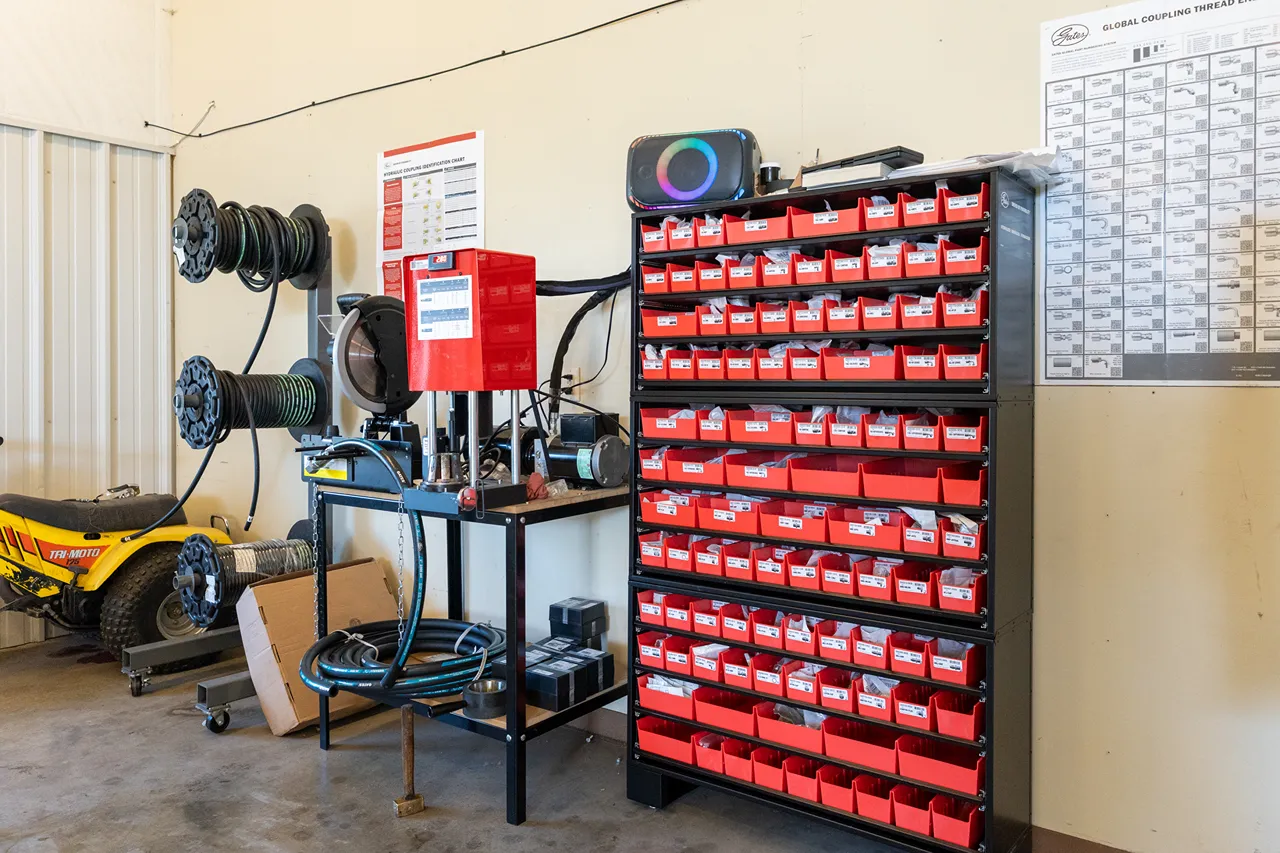
You don't need a warehouse full of inventory. A small supply of predictable fleet maintenance parts can make a major difference.
Consider stocking high-use items such as common air fittings, electrical connectors, bulbs, hoses, clamps, filters, belts, and frequently used brake hardware. Larger or expensive components can often remain supplier-stocked unless your fleet's repair history shows repeated demand.
Reviewing maintenance records can help you decide what deserves shelf space. If your operation replaces the same hose, valve, light, or electrical connector several times per year, keeping one or two on hand may prevent unnecessary downtime.
How Can Better Parts Planning Reduce Truck Downtime?
The best sourcing strategy starts before something breaks.
Track frequently replaced components, record part numbers after successful repairs, document truck specifications, and identify your dependable sourcing options ahead of time. That information turns an urgent breakdown into a much simpler parts request.
Preventive maintenance also supports this approach. Regular inspections can reveal worn brakes, tires, fluids, suspension, and other components before they become unexpected failures.
For Long Prairie's agricultural, manufacturing, delivery, and regional trucking operations, that preparation keeps equipment available when workloads are highest.
Keep the Right Heavy-Duty Truck Parts Within Reach
Good parts sourcing comes down to three things: verify fitment, match the component to the truck's application, and consider the real cost of downtime.
As October gives way to colder Minnesota weather, batteries, charging systems, air brakes, cooling components, lighting, and trailer wheel ends deserve extra attention. A little preparation now can prevent a minor wear item from becoming a major operating delay.
If your truck or fleet needs replacement parts for heavy-duty trucks in Long Prairie, our team at Praire View has you covered with an extensive inventory of OEM and aftermarket components. Just give us a call at 320-333-8292 to order your parts.
FAQs
What information do I need to order heavy-duty truck parts?
Start with the VIN, truck make and model, model year, engine, transmission, axle, and suspension information. When possible, provide the manufacturer and part number printed directly on the component being replaced.
Which heavy-duty truck parts should fleets keep in stock?
Common wear items such as air fittings, hoses, electrical connectors, bulbs, filters, belts, clamps, and frequently used brake hardware are good candidates. Your fleet's maintenance history should ultimately determine which parts deserve inventory space.
Are OEM parts always required for heavy-duty trucks?
Not necessarily. Quality aftermarket components may be suitable when they meet the required specifications and application. Correct fitment, component quality, warranty coverage, and the truck's duty cycle should guide the decision.
Why does parts availability matter so much for commercial trucks?
Commercial vehicles generate value while they're working. A cheaper component may not save money if long shipping times keep a tractor, delivery truck, farm vehicle, or trailer out of service for several days.
Which truck parts should receive extra attention before Minnesota winter?
Batteries, starters, alternators, belts, hoses, air-brake components, lighting, electrical connections, trailer brakes, and wheel-end components deserve attention before sustained colder weather arrives.


